

 App Store
 Profile
 Security
 Sign Out
 Feeds
Feeds
 Articles
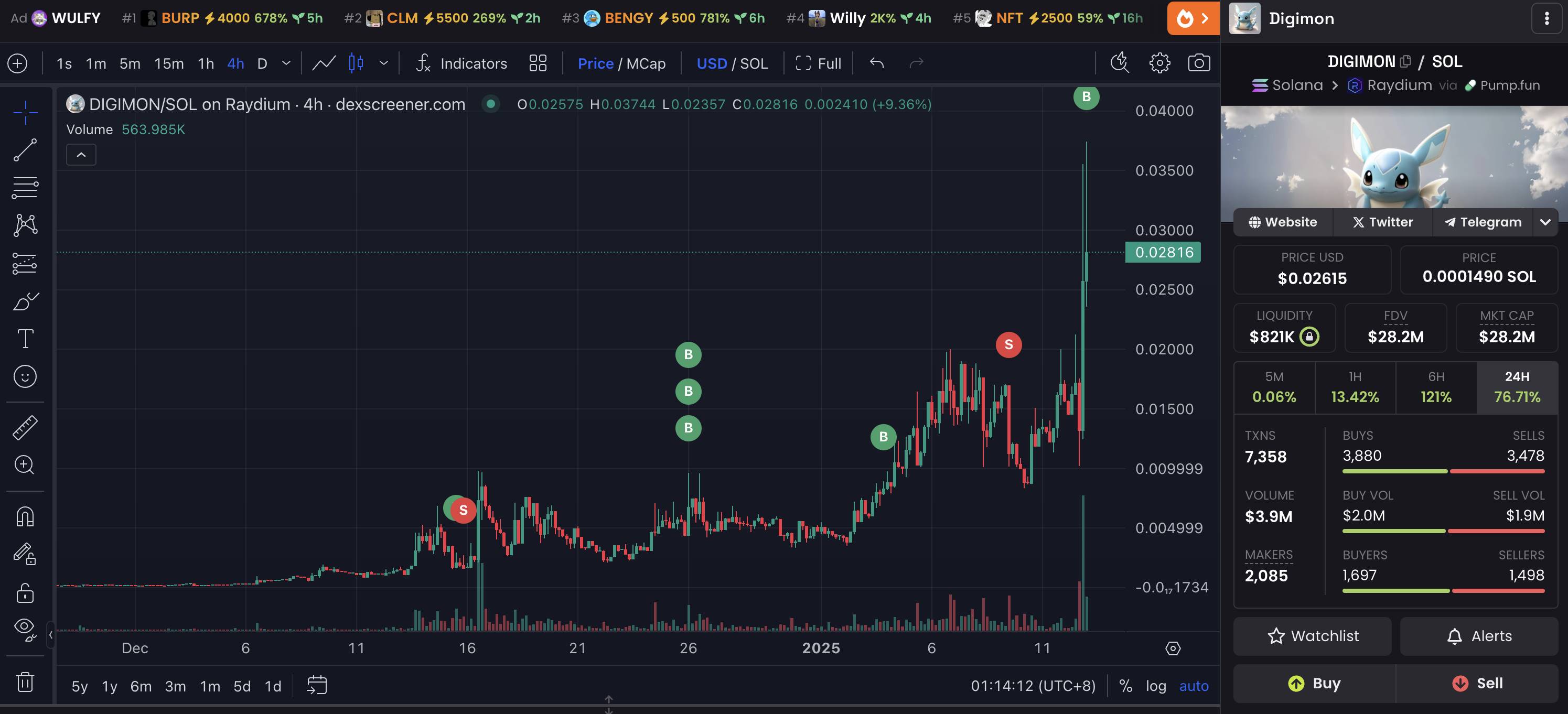
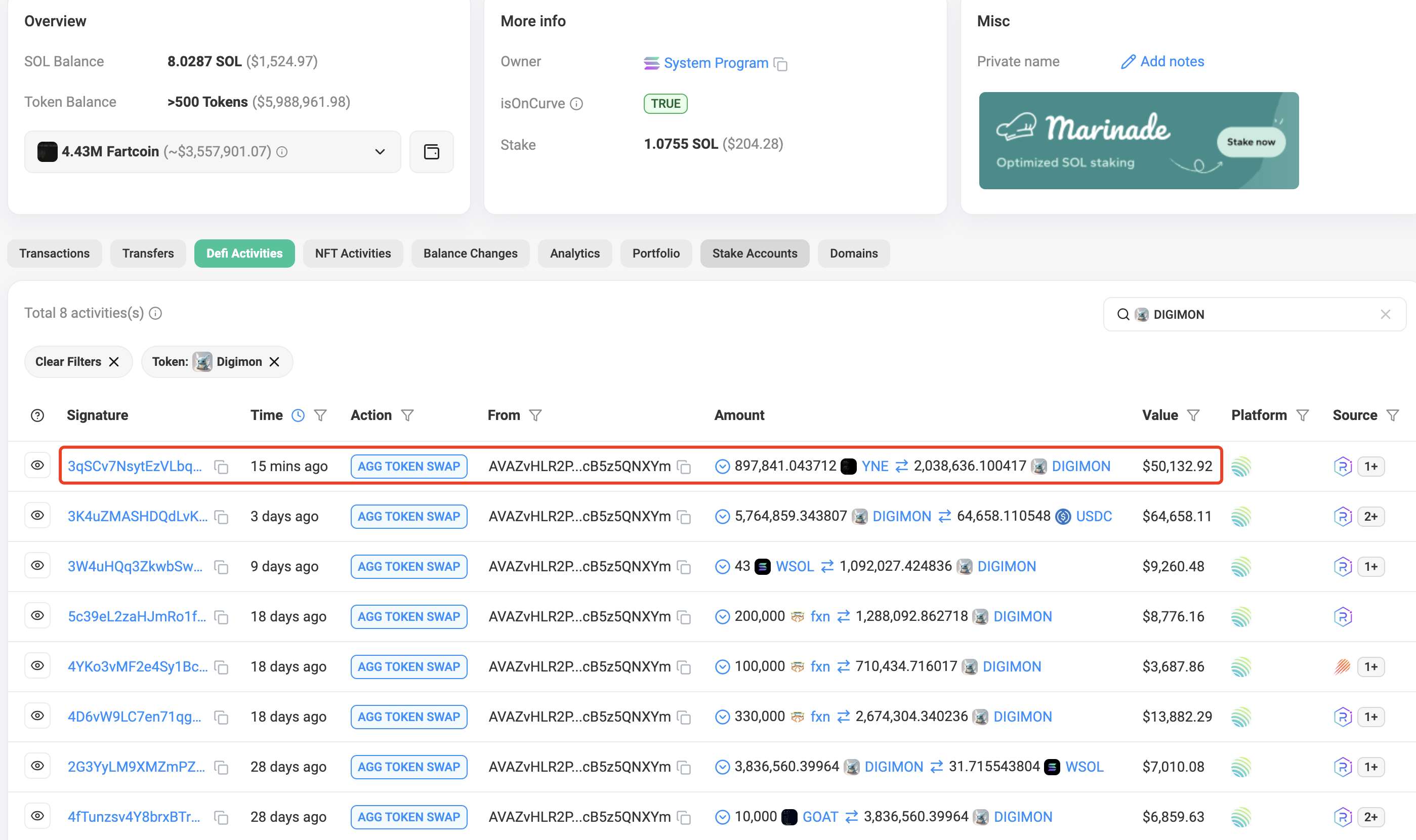
A wallet that was suspected by the community to belong to Ansem(@blknoiz06) bought 2.04M $DIGIMON($50K) again 15 minutes ago.
2025.01.13 01:23:17
A wallet that was suspected by the community to belong to Ansem(@blknoiz06) bought 2.04M $DIGIMON($50K) again 15 minutes ago.
Ansem had previously made ~$29K on $DIGIMON.
https://solscan.io/account/AVAZvHLR2PcWpDf8BXY4rVxNHYRBytycHkcB5z5QNXYm
 Source
 Add to Favorites
 Download image
 Share x
 Copy link
U.S. regulators are once again investigating Polymarket for potential violations of the settlement agreement reached in 2022.
21 minutes ago
SK Hynix' third-quarter revenue hit 104.6 trillion Korean won, surpassing expectations, while its net profit came in at 39.5 trillion Korean won, missing forecasts.
21 minutes ago
SK Hynix plans to return approximately 100 trillion won to its shareholders in 2026, and intends to repurchase and cancel shares worth more than 60 trillion won.
21 minutes ago
US stocks closed, with Neocloud, optical communication, storage, and semiconductor stocks rising across the board; NBIS surged more than 11%.
21 minutes ago
SK Hynix forecasts a substantial increase in its capital expenditure in 2027, with more than half of its production capacity for 2027 to 2028 already locked in under long-term supply agreements.
21 minutes ago
Trading platform Cancore, built on the Canton network, has raised $7.2 million in funding.
21 minutes ago
Hot feeds
A trader profits $448K by monitoring #Binance's new listings!
2024.12.13 17:37:29
Last week, funds have flowed into #Bitcoin, #Ethereum, and #Hyperliquid.
2024.12.16 14:48:36
A $PEPE whale that had been dormant for 600 days transferred all 2.1T $PEPE($52M) to a new address.
2024.12.14 10:35:27
When Elon Musk tweeted about Moltbook, the meme coin MOLT experienced a short-term 30% price surge, hitting a new all-time high of $114 million.
2026.01.31 18:37:29
A smart #AI coin trader made $17.6M on $GOAT, $ai16z, $Fartcoin,$arc.
2025.01.05 16:05:18
A sniper earned 2,277 $ETH ($8.3M) trading $SHIRO within 18 hours!
2024.12.03 23:09:08
MoreHot Articles

How did I turn $1,000 into $30,000 with smart money?
2024.12.09
10 promising AI Agent cryptos
2024.12.05
The 30-Year-Old Entrepreneur Behind Virtual, a Multi-Million Dollar AI Agent Society
2025.01.22
10 smart traders specializing in MEMEcoin trading on Solana
2024.12.09
A trader lost $73.9K trading memecoins in just 3 minutes — a lesson for us all!
2024.12.13
What is $SPORE? Let us take you through the on-chain records to show you how it works.
2024.12.25

